The Season of Abundance and the Fear of Receiving
Why do people sabotage peace, success, love, and opportunity when they finally arrive? Discover the hidden fear of receiving, how subconscious patterns resist abundance, and why true growth requires accepting the good already present in your life.
If this question has ever lived in your body, this article found you for a reason.
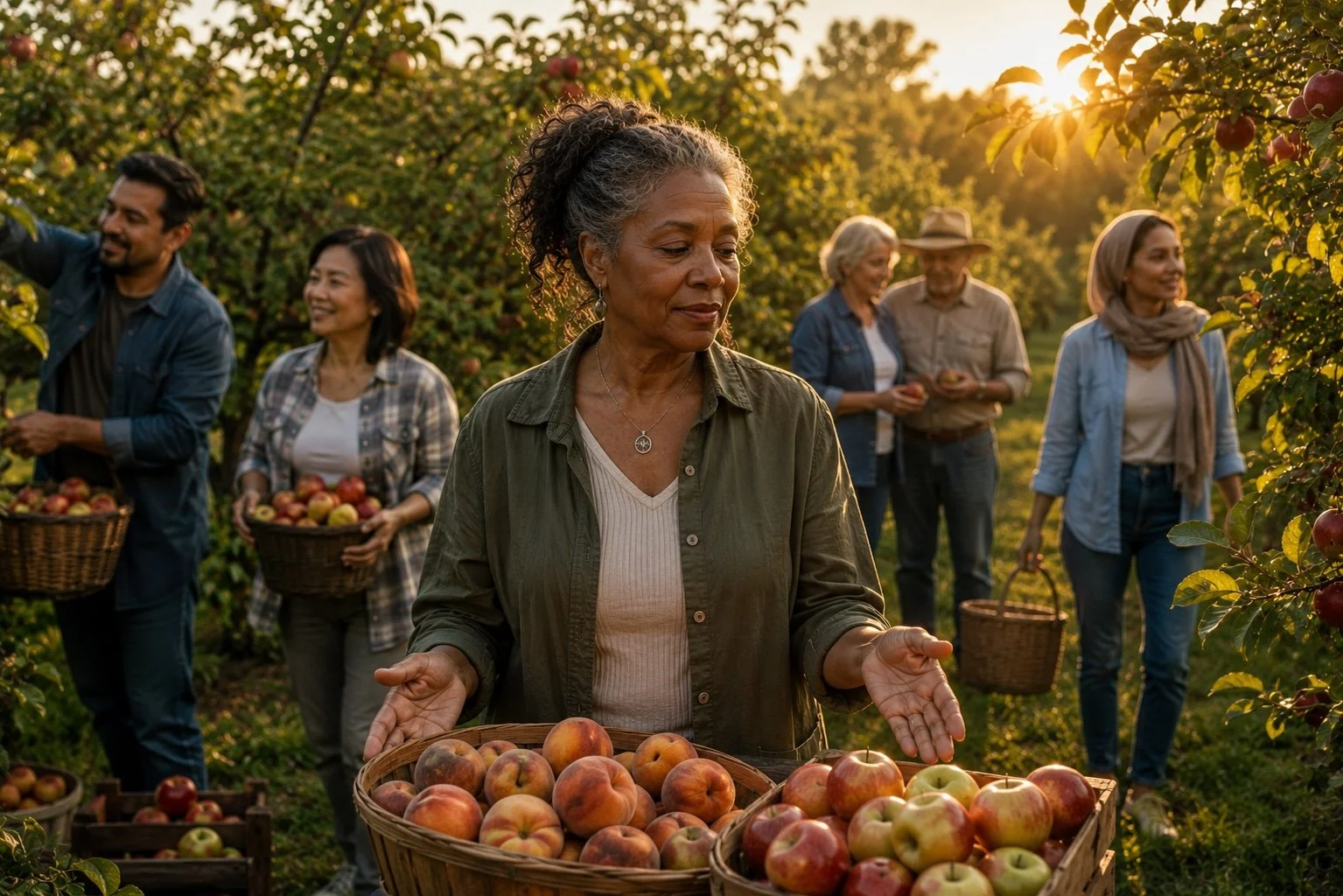
Summer is nature's annual declaration that abundance is real.
Trees stretch toward the sky covered in leaves.
Gardens overflow with color. Birds sing before dawn. Lakes shimmer beneath the sun. Fields become seas of green. Life itself seems to expand in every direction. There is no hesitation in nature's expression. There is no apology. There is no guilt. There is no debate about whether abundance is deserved.
Nature simply receives.
Yet human beings often struggle with the very thing that nature demonstrates so effortlessly.
Receiving.
Most people spend their lives believing they want abundance. They want peace. They want success. They want healthy relationships. They want financial stability. They want happiness. They want freedom from stress and uncertainty. Yet something fascinating often occurs when these things begin appearing.
They become uncomfortable.
Not consciously.
Subconsciously.
A relationship begins improving, and unnecessary arguments suddenly emerge.
Finances become stable, and reckless decisions begin appearing.
Life becomes peaceful, and boredom transforms into self-created drama.
A new opportunity arrives, and self-doubt suddenly becomes louder than ever.
From the outside, these reactions make little sense. Why would someone sabotage the very thing they claim to want?
The answer often lies beneath conscious awareness.
Many people have spent so much time surviving that struggle becomes familiar.
The nervous system becomes conditioned to chaos.
The mind becomes conditioned to uncertainty.
The subconscious becomes conditioned to conflict.
Over time, these states stop feeling uncomfortable.
They begin feeling normal.
This creates one of the great paradoxes of human consciousness. A person may consciously desire peace while subconsciously trusting struggle. They may consciously seek abundance while subconsciously identifying with lack. They may consciously want love while subconsciously feeling more comfortable with disappointment.
The result is a silent internal tug-of-war.
One part of the self moves toward expansion.
Another part pulls back toward familiarity.
At Life in Synergy, we often observe that people misunderstand the nature of resistance. They assume resistance appears when pursuing something difficult. In reality, resistance often becomes strongest when life starts improving.
The pattern senses change.
The pattern senses growth.
The pattern senses the possibility of losing its influence.
And so it attempts to re-establish itself through familiar emotional states.
This is one reason why peace feels uncomfortable for so many people.
Peace removes distraction.
Peace removes urgency.
Peace removes the familiar stimulation of conflict.
Without those things, many people suddenly encounter something they have spent years avoiding—themselves.
The individual who has defined themselves through struggle may feel lost when the struggle disappears.
The individual who has defined themselves through fixing problems may become anxious when there are no problems to fix.
The individual who has spent decades preparing for disaster may become suspicious when life begins flowing smoothly.
This does not mean something is wrong.
It means awareness is needed.
Summer provides a beautiful metaphor for this lesson.
A tree does not fight its own fruit.
An apple tree does not spend months producing apples only to reject them once they appear.
A flower does not apologize for blooming.
A river does not question whether it deserves to flow.
Nature demonstrates an effortless relationship with abundance because nature does not carry the subconscious stories humans create about worthiness, guilt, inadequacy, or fear.
Human beings often do.
Many people secretly fear receiving because receiving carries responsibility.
When abundance arrives, excuses disappear.
When peace arrives, distractions disappear.
When opportunity arrives, hesitation becomes visible.
When love arrives, vulnerability becomes necessary.
Abundance exposes what scarcity often conceals.
This is why receiving is not merely an external event.
Receiving is a spiritual skill.
It requires the willingness to let go of old identities.
The identity of the struggler.
The identity of the victim.
The identity of the one who never catches a break.
The identity of the person who always expects disappointment.
These identities may feel familiar, but familiarity is not the same as truth.
The deeper truth is that abundance is not something you earn through suffering.
Abundance is something you learn to allow.
Not because life is always easy.
Not because challenges disappear.
But because your relationship with receiving changes.
You stop arguing with peace.
You stop questioning every positive outcome.
You stop assuming something bad must follow every good experience.
You stop treating abundance as a temporary visitor.
And begin treating it as a natural part of existence.
As summer unfolds around us, nature quietly asks a profound question.
Can you receive as easily as the trees receive sunlight?
Can you accept peace without creating conflict?
Can you allow abundance without immediately searching for what might go wrong?
Can you experience joy without waiting for its expiration date?
For many people, these questions reveal the next stage of growth.
Not the pursuit of abundance.
The acceptance of it.
Because sometimes the greatest obstacle standing between a person and the life they desire is not the absence of opportunity.'
It is the inability to receive what has already arrived.
For decades, Brian and Helena Collins have helped individuals identify and transform the subconscious and spiritual energy patterns that create recurring limitations in health, relationships, finances, purpose, and personal growth. Through the Apex Life in Synergy® Program, Synergistics Fitness Method®, and decades of real-world experience, Life in Synergy continues to help people recognize the hidden patterns that keep them trapped in struggle and guide them toward greater alignment, awareness, peace, and abundance. Learn more at www.lifeinsynergy.com.

The Martian Chronicles: Why My Neighbor's Rocket is Bigger than Mine
…We're tiny specks on a tiny speck, floating in a vast cosmic ocean. We've got the tech to start anew, but we're stuck in the old ways. Maybe instead of building higher walls or bigger cock rockets, we should work on expanding our consciousness. On understanding that no one here is worse, none are better... we're all equal to. Because, dear readers, at the end of the day, what's the point of conquering new worlds if we can't conquer our own need to be 'better' than someone else?

The Martian Ego.
Hello Earthlings and Martians alike!Today, we bring you a tale from the Red Planet, where the dust is redder, the sky is stranger, but the people... oh, they're just the same.
So, here I am, a new Martian. I left Earth thinking I'd escape the rat race, but guess what? The rats have spaceships now! And they're racing on Mars. You see, I thought technology would be our savior. We've got AI that can cook, clean, and practically do a backflip. But can it teach Mr. Zog from the next crater how to not flaunt his new anti-gravity boots? Nope.Then there's me, trying to meditate under the two suns (yes, Mars has two suns now, didn't you get the memo?). But how can one find inner peace when every five minutes there's a commercial rocket zooming past telling me to purchase the latest mind thought download via the amaz-mars-tesl-probe droids, greatly disturbing my chakras!
We've got it all here – Martian malls, zero-gravity exercise, interplanetary internet. But guess what's also tagging along from Earth? Egos. Big, giant, space-helmet-sized egos.
I overheard a conversation the other day. One ego filled “Martian” was bragging about his new solar-powered mansion that's apparently visible from Earth. I mean, why stop at the Joneses when you can make the whole Earth jealous, right? And that's when it hit me. We're out here, millions of miles from home, trying to be 'better' than the next person or even wayyyyy better than those “Earthlings” back on home planet 1.0.
But why?
We're tiny specks on a tiny speck, floating in a vast cosmic ocean. We've got the tech to start anew, but we're stuck in the old ways. Maybe instead of building higher walls or bigger cock rockets, we should work on expanding our consciousness. On understanding that no one here is worse, none are better... we're all equal to. Because, dear readers, at the end of the day, what's the point of conquering new worlds if we can't conquer our own need to be 'better' than someone else?
So, let's put aside those age-old agendas. Instead of looking at the next big thing, let's see each other. Because if we don't, we might just end up being a bunch of technologically advanced, spiritually bankrupt heading towards extinction Martians. And that certainly isn’t “new” or “cutting edge” tech and who wants that? So maybe the big tech is the tech you have inside you right now WAITING to be updated…..and imagine not updating that software for 10-20-30-40-50-60 years? Talk about a security hazard!!!
Want to get to know the greatest tech ever….the tech inside of you?
Then start your Apex Life in Synergy Journey NOW. Maybe the more “Earthlings” we get to understand themselves on Earth, the less vacant, lost and repetitive destructive subconscious energies will be “imported” to our future homes out in space.
Helena and Brian

The Illusion of 'Being First': Embracing a More Enlightened Approach to Success
.. The desire to be first, to have the most, and to stand above others, is frequently seen as a symbol of strength and success. However, this pursuit can be a sign of underlying weakness, a lack of inner balance, and a disconnection from a more enlightened state of being.

Stepping on others to be first, shows the world that you are truly last.
In today's fast-paced world, where the race to be first often eclipses the journey itself, we need to pause and reflect on what truly matters.
The desire to be first, to have the most, and to stand above others, is frequently seen as a symbol of strength and success. However, this pursuit can be a sign of underlying weakness, a lack of inner balance, and a disconnection from a more enlightened state of being.
The race to be first is deeply rooted in material success - the most money, the biggest house, the latest gadgets. It's a race that never ends, as there is always something newer, bigger, or better. But is this a true measure of success? Material possessions are fleeting. They bring temporary happiness, but they cannot fill the void of spiritual emptiness. In this context, the need to be first is not a strength but a reflection of inner insecurity and a craving for external validation.
True strength lies in contentment and inner peace. It's not about having all the toys but finding joy and fulfillment in what we have. This doesn't mean abandoning ambition or not striving for improvement. Instead, it's about recognizing that our worth isn't defined by our possessions or our position in a societal race. When we detach from the need to be first, we open ourselves to a more profound sense of happiness. We start valuing experiences over possessions, relationships over rankings, and personal growth over public recognition.
The pursuit of being first often leads to a solitary journey, where the focus is on individual achievement at the expense of collective well-being. But what if we shifted this perspective? What if success was measured by how much we contribute to the happiness and growth of others? Imagine a world where our goals are not about having more than our neighbors but ensuring that everyone has enough. This shift in mindset fosters a sense of community, empathy, and mutual support. It's not about diminishing personal success but about redefining it in a way that benefits all.
Enlightenment is about transcending the material race and finding a deeper, more meaningful connection with the universe. It's about understanding that our true essence is not defined by what we have but by who we are and how we impact the world. To be enlightened is to see beyond the superficial markers of success. It's to recognize that our true strength lies in our ability to uplift others, to share our blessings, and to live in harmony with the world around us.
In conclusion, the need to be first and have the most is a sign of weakness, not strength. True strength comes from inner balance, contentment, and a desire for collective well-being. As we strive for personal growth and enlightenment, let's redefine success in a way that nurtures not just ourselves but the world around us. Let's celebrate not what we have individually, but what we can achieve and share together.
A big heaping of word food for mind hunger, dont ya’ think?
Helena and Brian
The Road Not Seen: Learning from Our Ego's Missteps
Have you ever approached a teacher or a mentor, seeking guidance, only to let your ego convince you that you knew better?
It's a peculiar twist, isn't it? We seek out someone for their wisdom, and then, at the pivotal moment, our pride blinds us. This is a story not just about a wrong turn but about the humbling lessons that follow. Picture this: you're standing at a crossroads in your life. You know you need guidance, so you seek out a teacher……

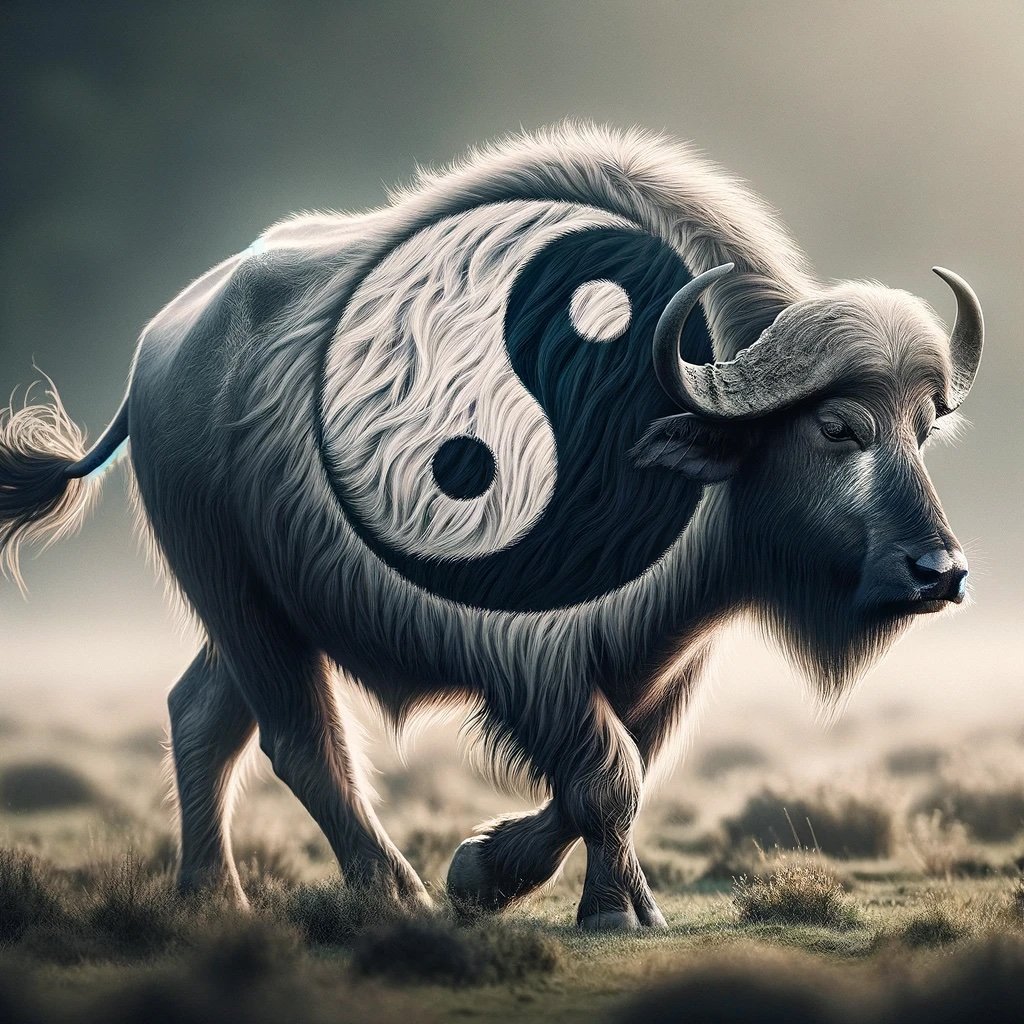
The wild buffalo of balance ©2023 Life in Synergy®
Hello there, friends.
Have you ever approached a teacher or a mentor, seeking guidance, only to let your ego convince you that you knew better?
It's a peculiar twist, isn't it? We seek out someone for their wisdom, and then, at the pivotal moment, our pride blinds us. This is a story not just about a wrong turn but about the humbling lessons that follow. Picture this: you're standing at a crossroads in your life. You know you need guidance, so you seek out a teacher. But as they begin to share their wisdom, a voice inside you whispers, “You know better.” This is where the journey takes an unexpected turn. The moment we tell our teacher, "I know more," we embark on a path led by ego. It seems right, fueled by a sense of self-assuredness. But soon, this path reveals its true nature – a labyrinth of repetitive patterns and missed wisdom. The wrong turn wasn't just a stray path; it was a mirror showing us the complexities of our own pride. Realizing the folly, we often then retreat to seek answers alone, jumping from book to book, philosophy to philosophy. Each book, each idea, feels like a step towards redemption, a way to fill the gaps we created. But the real answer isn't in the pages; it's in the unspoken dialogue between our ego and humility.
Revisiting the Teacher
There's profound power in revisiting that moment of prideful assertion.
What if admitting "I thought I knew more" is the first step towards truly understanding the bigger picture? This humbling return to the teacher – be it a person, a moment, or an experience – is where true learning resumes. The integration of this lesson is a dance of humility and wisdom. It's recognizing that our journey is enriched not just by the knowledge we seek from a mentor but also by understanding the limits of what we know. It's a delicate balance between seeking guidance and valuing the wisdom we already possess. Armed with this new understanding, our journey takes a more open-hearted turn. We still seek knowledge, but with an awareness of our own fallibility. Each step, each 'mistake', becomes a valuable chapter in our book of life, teaching us about humility, wisdom, and the beauty of lifelong learning.
In the end, our wrong turn – telling a teacher we knew more – becomes a critical point of growth. It's a chance for a lesson in humility, in the value of guidance, and in the power of admitting our missteps. Our paths are not just about the knowledge we gain but also about the wisdom we discover in our own vulnerabilities.
Today, think back to a moment when your ego led the way.
What did this experience teach you? Remember, the most profound lessons often come from acknowledging our misjudgments and embracing the journey back to humility and learning that leads back to the teacher that we thought we knew more. We always would joke at our multi award winning wellness studio on Boston’s Newbury street with this statement when clients entered the “ I know”….” I have no idea what you are talking about, but I know more about it than you”.
Helena and Brian Collins Best of Boston Winners and lifelong spiritual teachers to countless individuals and businesses
www.lifeinsynergy.com

The Dangerous Energy of Jealousy: Understanding and Overcoming Its Destructive Power
Jealousy, a complex and powerful emotion, can fuel feelings of insecurity, envy, and resentment. While it is a natural human emotion, its energy can be destructive if not understood and managed properly.,,,

Introduction
Jealousy, a complex and powerful emotion, can fuel feelings of insecurity, envy, and resentment. While it is a natural human emotion, its energy can be destructive if not understood and managed properly. This blog will explore the dangerous aspects of jealousy, its impact on relationships, and provide strategies for managing and overcoming its negative energy.
The Nature of Jealousy
Jealousy typically arises when we perceive a threat to our self-worth, social standing, or a valued relationship. This perception of threat can lead to a range of negative emotions and behaviors, such as anger, sadness, anxiety, and even aggression. The energy of jealousy, when unchecked, can be destructive and consume our thoughts, emotions, and actions.
The Impact of Jealousy on Relationships
The dangerous energy of jealousy can have a significant impact on relationships, both romantic and platonic. Here are some ways jealousy can negatively affect relationships:
a. Eroding Trust: Jealousy can cause individuals to become overly suspicious and mistrustful of their partners or friends, leading to a breakdown of trust and emotional intimacy.
b. Creating Conflict: The negative emotions associated with jealousy can lead to arguments, passive-aggressive behavior, and unresolved conflict within a relationship.
c. Diminishing Self-Esteem: Jealousy can lead to feelings of inadequacy, self-doubt, and low self-esteem, making it difficult for individuals to maintain healthy and fulfilling relationships.
d. Encouraging Controlling Behavior: Jealous individuals may attempt to control their partners or friends in an effort to mitigate their own insecurities, leading to toxic and unhealthy relationship dynamics.
Strategies for Managing and Overcoming the Dangerous Energy of Jealousy
a. Self-Awareness: Recognize and acknowledge your jealous feelings. Understand the triggers and the underlying insecurities that fuel your jealousy.
b. Improve Self-Esteem: Work on building your self-confidence and self-worth through positive self-affirmations, engaging in activities you enjoy, and surrounding yourself with supportive individuals.
c. Open Communication: Engage in honest and open conversations with your partner or friends about your feelings of jealousy. This can help you address and resolve any underlying issues or misconceptions.
d. Practice Gratitude: Cultivate an attitude of gratitude by focusing on the positive aspects of your life and your relationships. This can help shift your perspective and reduce feelings of jealousy.
e. Seek Professional Help: If jealousy is causing significant distress or negatively impacting your relationships, consider seeking professional help from a therapist or counselor.
The dangerous energy of jealousy, when left unchecked, can lead to the breakdown of relationships and a negative impact on our mental and emotional well-being. By understanding the nature of jealousy, recognizing its destructive power, and implementing strategies to manage and overcome it, we can harness its energy for self-improvement and growth. Embrace self-awareness, communication, and gratitude to transform jealousy into a catalyst for positive change in your life and relationships.
Jealousy is just an energy that is waiting to be transmuted…find out here how you can do so.
Helena and Brian