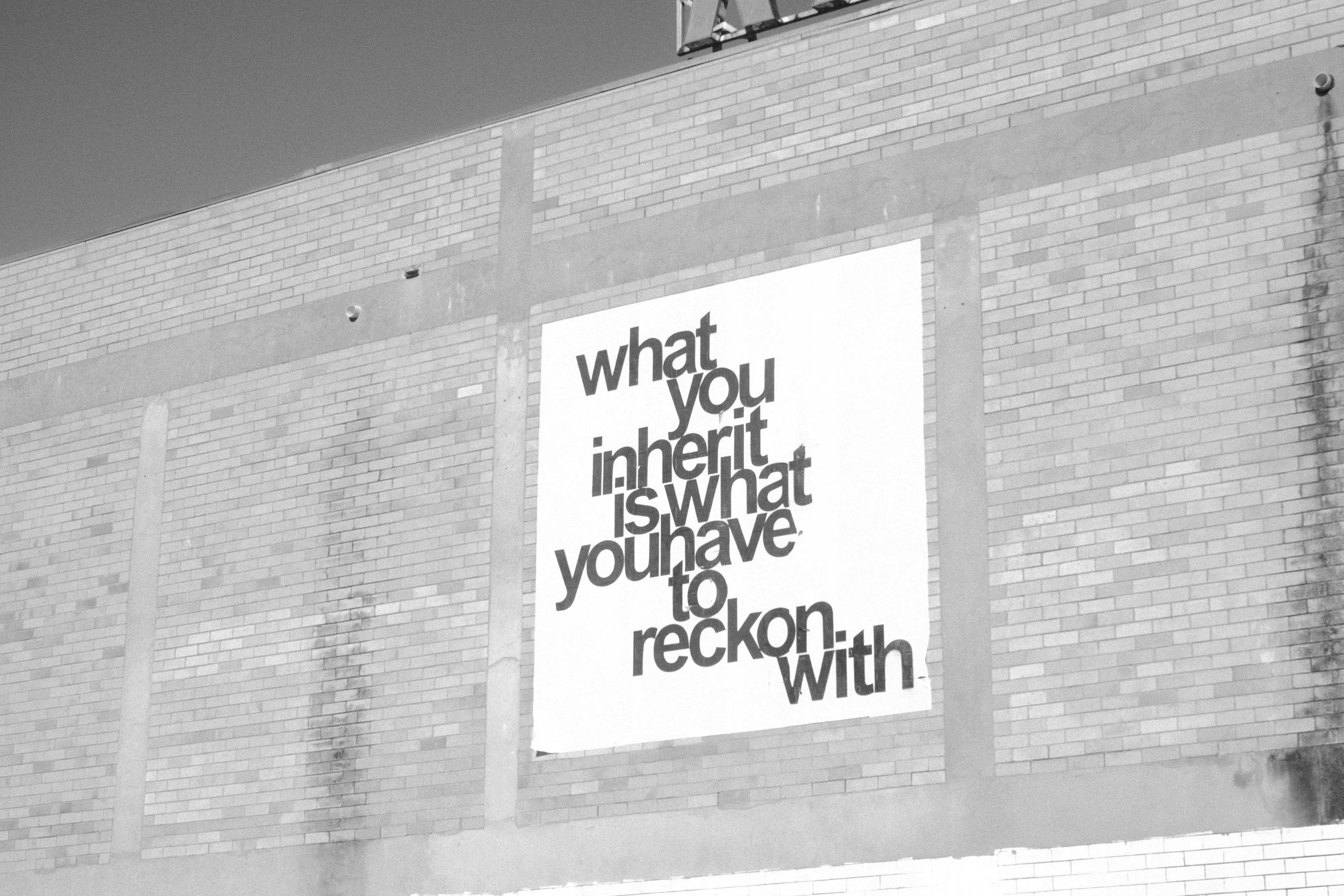
Subconscious Patterns: You Can Feel the Energy and Still Miss the Pattern
By Helena Collins and Brian Collins | Life in Synergy®
If this question has ever lived in your body, this article found you for a reason.
We love talking about energy.
Chi. Prana. Mana. Ki.
Different cultures and spiritual traditions have developed rich languages for understanding life force, vitality, presence, and the unseen dimensions of human experience.
And let's face it, talking about energy can make us feel pretty enlightened.
But here's an uncomfortable possibility.
You can meditate every morning, discuss consciousness every afternoon, surround yourself with crystals, speak beautifully about universal love, and still repeat the same destructive emotional patterns.
Because understanding the language of energy is not the same as understanding yourself.
The Subconscious Doesn't Need Your Permission
Many of our reactions occur before we have consciously examined them.
A particular tone of voice can trigger defensiveness.
A moment of uncertainty can produce fear.
Someone else's success can awaken feelings of inadequacy.
A simple disagreement can suddenly feel like an attack on our identity.
Why?
Because the present moment may be interacting with beliefs and emotional associations formed long before the current experience.
The subconscious mind can influence our expectations, habits, perceptions, and reactions without announcing its involvement.
We may believe we are responding to what is happening now when we are also responding to what happened years ago.
Spiritual Knowledge Is Not Automatically Self-Awareness
There is nothing inherently wrong with exploring energetic traditions.
But spiritual vocabulary can become another place to hide from uncomfortable personal truths.
We may describe someone as having negative energy without examining why their behavior provokes such an intense response within us.
We may blame an energetic imbalance for a conflict without acknowledging our own communication.
We may speak about universal consciousness while remaining unwilling to question the beliefs that govern our daily decisions.
The issue is not whether someone believes in chi, prana, mana, or ki.
The issue is whether those beliefs are helping them become more aware, responsible, compassionate, and grounded.
Spirituality should expand our willingness to understand ourselves, not provide an elegant excuse to avoid doing so.
The Body Often Reveals What the Mind Avoids
Consider what happens when you encounter a familiar emotional trigger.
Your breathing changes.
Your muscles tighten.
Your attention narrows.
You may feel an immediate urge to defend yourself, withdraw, please someone, or regain control.
These physical responses can provide useful clues about your emotional state.
Through practices that cultivate bodily awareness, including movement and conscious attention, we can begin recognizing patterns before they dictate our behavior.
Helena Collins created the Synergistics Fitness Method® in 1996, developing an approach to physical fitness that emphasizes intentional movement and awareness of the body.
At Life in Synergy®, we also explore how conscious attention to our thoughts, emotions, and physical experiences can support a more integrated relationship with ourselves.
Awareness Must Become Action
Recognizing a pattern is only the beginning.
Transformation requires us to respond differently when the familiar experience returns.
That may mean remaining present during a difficult conversation.
Choosing honesty instead of avoidance.
Establishing a boundary instead of seeking approval.
Or questioning an interpretation before accepting it as absolute truth.
These may not sound like spectacular spiritual accomplishments.
But genuine growth is often remarkably ordinary.
It happens in the small moments when we stop surrendering our choices to an old emotional habit.
If This Article Found You...
Perhaps your next awakening will not arrive through another spiritual teaching, ceremony, or extraordinary experience.
Perhaps it will arrive in the moment you recognize an old reaction and choose not to repeat it.
The energy you seek to understand is inseparable from the life you are choosing to live.
Explore Life in Synergy® at www.lifeinsynergy.com.
4. Self-Sabotage: When the Person Standing in Your Way Is You
By Helena Collins and Brian Collins | Life in Synergy®
If this question has ever lived in your body, this article found you for a reason.
Self-sabotage rarely walks into your life wearing a name tag.
It doesn't announce, "Hello, I'm here to undermine your happiness, your relationships, your health, your financial stability, and your peace of mind."
It is much more subtle than that.
It disguises itself as caution, loyalty, practicality, responsibility, self-protection, and sometimes even love.
And before you recognize what is happening, it has quietly worked its way into nearly every aspect of your existence.
Self-Sabotage Is Not Just About Bad Decisions
When people hear the term self-sabotage, they often think about procrastination, failed diets, unhealthy relationships, or missed opportunities.
But self-sabotage can reach far beyond any single behavior.
It can influence the entire relationship you have with your life.
You may sabotage your happiness by constantly anticipating disappointment.
You may sabotage your health by placing everyone else's needs above your own.
You may sabotage your relationships by assuming rejection before it occurs.
You may sabotage your financial well-being by allowing fear to dictate every decision.
You may sabotage your spiritual development by convincing yourself that understanding a concept is the same as living it.
And perhaps most painfully, you may sabotage your inner peace by allowing other people's opinions to become more important than your own understanding.
When Other People's Lies Become Your Inner Voice
Here is an aspect of self-sabotage that deserves far more attention.
Sometimes the doubts we carry did not originate with us.
They were planted through repeated criticism, manipulation, dishonesty, betrayal, or the calculated distortions of people who benefited from our uncertainty.
Someone may have repeatedly questioned your judgment.
Someone may have misrepresented your intentions.
Someone may have convinced others of a story about you that bore little resemblance to the truth.
And over time, the damage can move inward.
You begin questioning your perceptions.
You second-guess decisions you once would have made confidently.
You hesitate to speak honestly because you fear being misunderstood, criticized, or attacked.
The outside deception has become an internal conversation.
But recognizing this influence does not mean accepting the lies as truth.
It means understanding how someone else's behavior may have affected your relationship with yourself.
And deciding whether you are willing to continue giving those voices authority over your life.
The Familiar Prison of Self-Doubt
Self-sabotage can become so familiar that we mistake it for our personality.
"I'm just not confident."
"I'm not good with money."
"I always attract the wrong people."
"I never finish what I start."
"Things never work out for me."
Each statement may feel like an observation.
But repeated often enough, it can become an instruction.
We begin making decisions consistent with the identity we have accepted.
And when life presents an opportunity to step outside that identity, we may retreat toward the familiar, even when the familiar causes suffering.
You Cannot Heal What You Refuse to Recognize
At Life in Synergy®, we encourage people to examine the patterns operating beneath their daily experiences.
Not to blame themselves for everything that has happened.
Not to deny the harm others may have caused.
And certainly not to pretend that positive thinking alone can resolve every challenge.
The purpose is to understand where our personal responsibility exists.
Our principle of giving 100% of your 50% becomes particularly important here.
You cannot control another person's dishonesty, manipulation, or behavior.
But you can begin reclaiming your authority over what you believe, how you respond, what boundaries you establish, and which experiences you continue to participate in.
Self-Sabotage Can End Where Self-Understanding Begins
Imagine approaching your life without automatically expecting failure.
Imagine recognizing someone else's deception without allowing it to destroy your confidence.
Imagine making decisions from understanding rather than fear.
Imagine allowing yourself to experience happiness without immediately searching for what might go wrong.
These changes do not require you to become someone else.
They require you to become more conscious of the patterns that have been influencing the person you already are.
Through Apex Life in Synergy®, we explore these recurring human experiences and the relationship between self-awareness, emotional responsibility, and conscious choice.
If This Article Found You...
Perhaps the person standing in your way is not the person you truly are.
Perhaps it is the collection of beliefs, fears, expectations, and emotional habits you have mistaken for your identity.
You do not have to keep living according to a story that no longer reflects your understanding.
And you do not have to allow another person's lies to become the truth you tell yourself.
Your life is not required to remain a repetition of what has already happened.