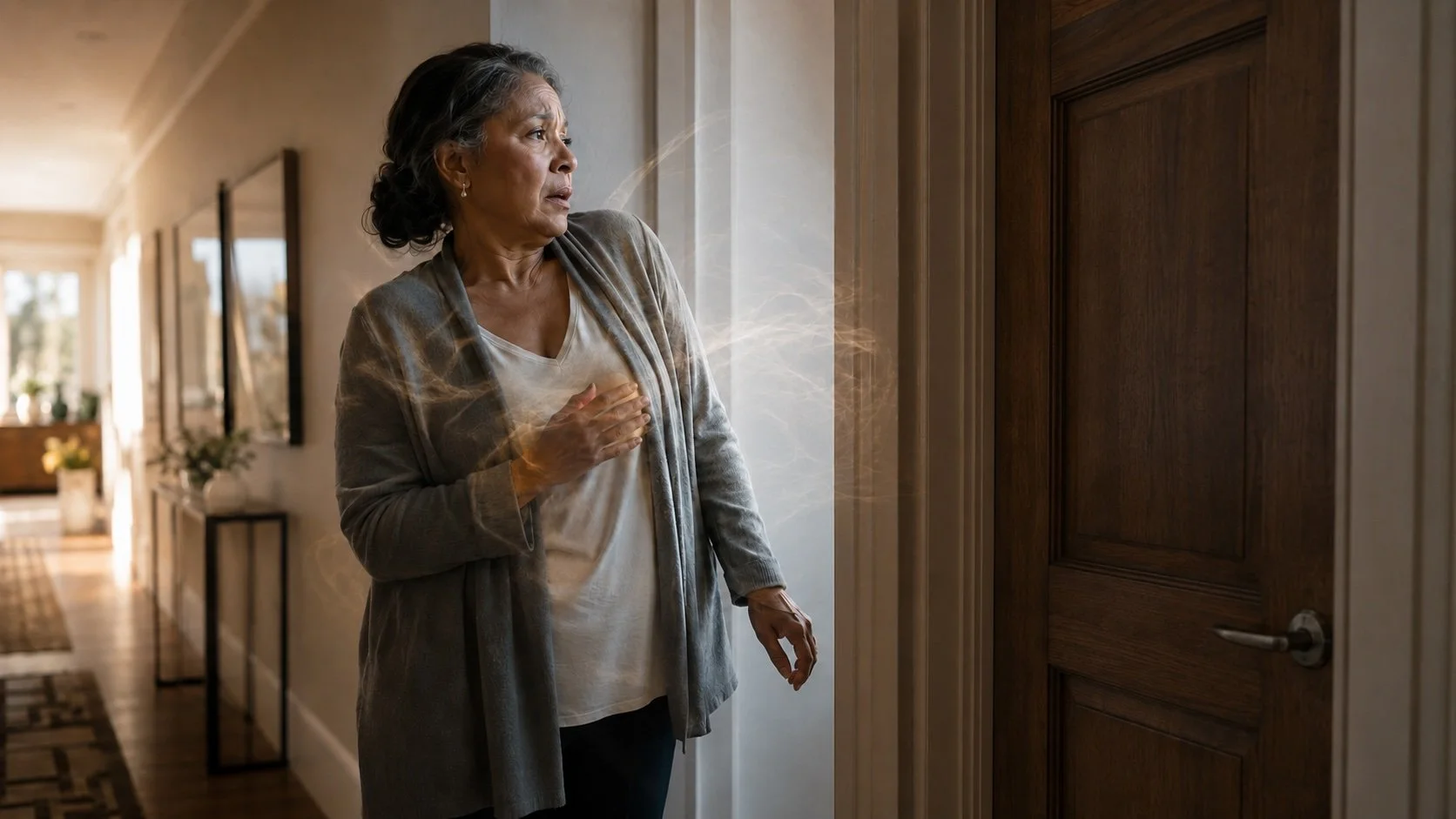
What Remains After the Door Slams? The Energy We Leave Behind
A slammed door ends a moment, but not its energetic impact. Discover how emotional energy, unresolved patterns, and conscious awareness shape every relationship.
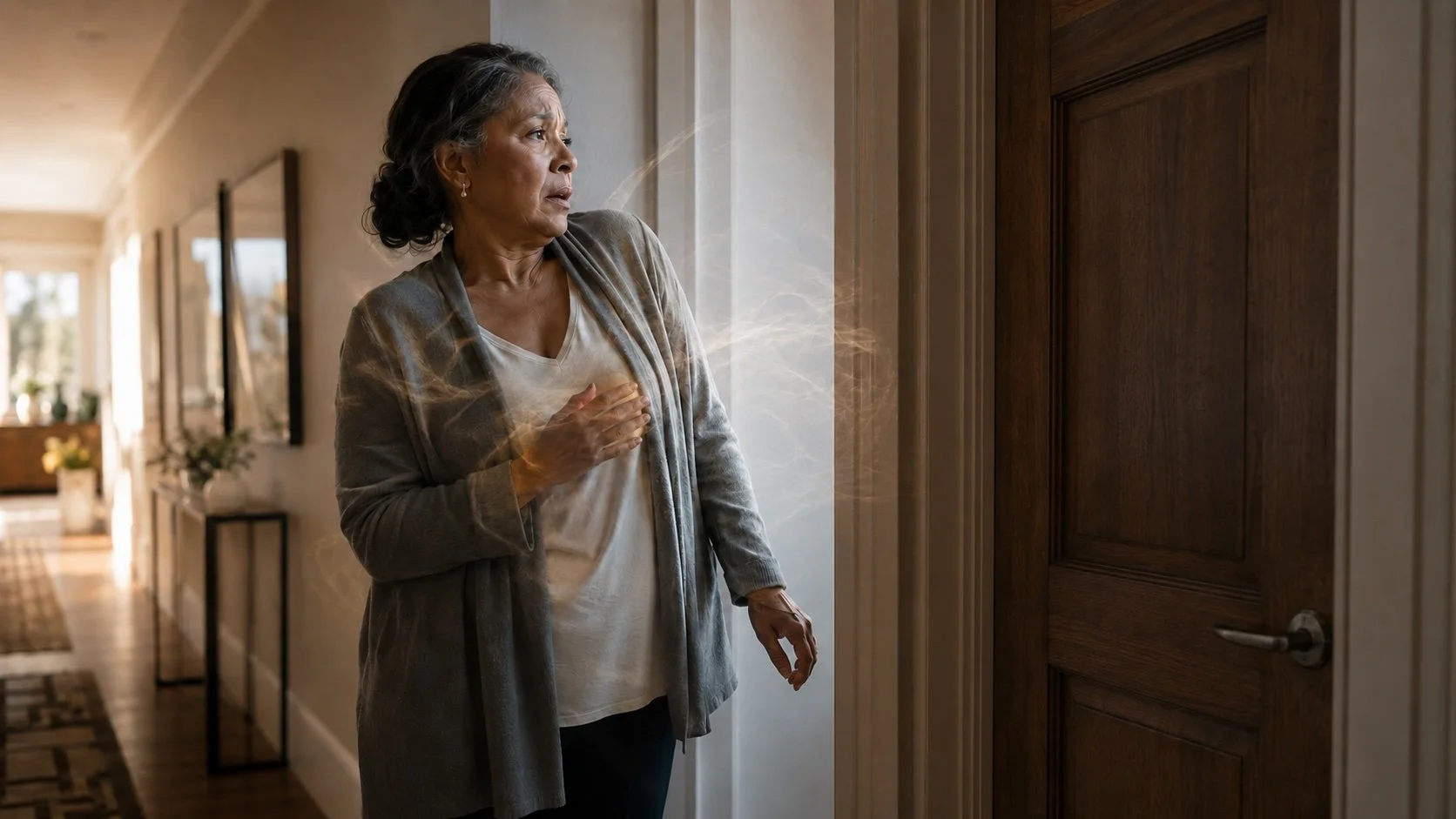
If this question has ever lived in your body, this article found you for a reason.
By Helena Collins, creator of the Apex Life in Synergy® Program
A door slams.
The sound lasts only a second. The physical movement is over almost as soon as it begins. Yet the moment itself may remain suspended in the room, in the body, and between two people long after the door has stopped moving.
One person stands on one side, perhaps shaking, furious, frightened, or suddenly numb. The other walks away, convinced that the interaction has ended. But has it?
At Life in Synergy®, we understand human interaction as more than the exchange of words and visible gestures. Every encounter also carries intention, emotion, attention, and energy. A door slammed in someone’s face is therefore not merely an object being closed. It can become a declaration without language: You are shut out. You do not matter. Your presence is unwanted. I refuse to meet you here.
The person closing the door may not consciously mean all of those things. They may simply be overwhelmed and desperate to escape an interaction. But human beings do not receive one another through intention alone. We also receive impact. The space between what one person intended and what the other person experienced is where many repeating patterns begin.
The body hears the slam
Before the conscious mind has time to explain the event, the body may respond. The shoulders tighten. The jaw locks. Breathing becomes shallow. The heart seems to strike harder against the chest. A person may freeze in place or immediately feel the urge to shout, cry, retaliate, or disappear.
This physical response does not prove weakness or overreaction. The body is responding to sudden sound, motion, conflict, and perceived rejection. It is attempting to determine whether the moment is over or whether something else is coming.
For the person who slammed the door, the body is also involved. Anger does not evaporate merely because a barrier has been placed between two people. The hand that pushed the door may still be tense. The breath may remain shortened. The mind may begin constructing a case for why the action was justified. Beneath that mental argument, however, the body can remain caught inside the unfinished encounter.
This is one reason dramatic exits rarely deliver the freedom they promise. They create distance, but distance is not necessarily resolution. The room changes; the inner state often does not.
The etheric echo of an unfinished moment
Within the spiritual framework of Life in Synergy®, we use the word etheric to describe a subtle energetic dimension of human experience. This is not presented as a medical measurement. It is a way of understanding the felt atmosphere carried by intention, emotion, and unresolved interaction.
Most people have experienced this dimension whether or not they use spiritual language for it. You enter a room after an argument and immediately sense that something happened. A person says, “I’m fine,” yet the space around them feels anything but fine. Someone leaves, but their anger appears to remain behind like heat in the air.
When a door is slammed in another person’s face, the etheric exchange can feel abrupt and violent because the relationship has been severed in motion but not completed in consciousness. The physical door closes; the energetic interaction remains open.
The rejected person may carry the moment forward as humiliation, abandonment, anger, or self-doubt. The person who slammed the door may carry it as righteousness, guilt, fear, or the temporary intoxication of control. Each person may leave with a different story, but both have been altered by the exchange.
If neither person becomes conscious of what happened, the energy seeks another place to go. It may appear later as coldness at dinner, impatience with a child, tension in the neck, sleepless mental rehearsals, or an argument about something apparently unrelated. Unprocessed energy is rarely loyal to its original location. It travels.
This does not mean every uncomfortable feeling is a mystical force, nor does it mean one difficult moment permanently damages an etheric field. It means that what we refuse to meet consciously can continue shaping perception, behavior, and the atmosphere of a relationship.
A boundary and a punishment are not the same thing
There are moments when closing a door is necessary. If an interaction is unsafe, abusive, threatening, or escalating beyond control, creating physical distance may be the wisest and most loving choice available. Spiritual responsibility never requires someone to remain accessible to harm.
But there is a profound difference between closing a door to establish safety and slamming it to inflict pain.
A conscious boundary says, “I cannot continue this interaction right now. I am stepping away.” A punitive gesture says, “I want you to feel my rejection.” Outwardly, the actions may look similar. Energetically, they are not.
The difference lives in intention, awareness, and what happens next. Does the person return when calm and take responsibility for their part? Do they explain the boundary? Do they acknowledge the impact? Or is silence used as a weapon, leaving the other person to wander inside uncertainty?
At Life in Synergy®, we teach that each person is 100% responsible for their 50% of an interaction. This does not mean accepting blame for another person’s behavior. It means refusing to abandon responsibility for the energy, choices, and patterns that belong to us. If you slammed the door, my responsibility is not erased because you were difficult. Consciousness begins when both people stop using the other person’s behavior as permission to remain unconscious.
The pattern beneath the hand
The door is rarely the whole story.
For one person, the slam may be an old pattern of power: When I feel vulnerable, I end the encounter before you can leave me. For another, it may be a pattern of emotional disappearance: When conflict awakens discomfort, I remove myself without explanation. For the person left outside, it may awaken an older wound: Once again, I am the one who is excluded, unheard, or abandoned.
These patterns can meet with extraordinary precision. One person fears being controlled and pushes away. The other fears abandonment and pursues. The pursuit intensifies the first person’s need to escape; the escape intensifies the second person’s need to pursue. Soon, neither is responding only to the present moment. Each is reacting from a history that has entered the room wearing today’s clothes.
This is why simply declaring who was right is often insufficient. Rightness may settle an argument, but it does not necessarily reveal the pattern. The deeper question is not only, “Who slammed the door?” It is, “What became activated in each of us before the door ever moved?”
Returning consciousness to the threshold
Healing does not require pretending the moment was harmless. It asks us to return to the threshold with greater awareness than we possessed when we left it.
Begin with the body. Before composing the perfect apology or defense, stop. Feel your feet. Release the jaw. Allow the exhalation to lengthen naturally. Notice whether the body is preparing to fight a battle that is no longer physically happening. A Return to One practice can help interrupt the momentum—not to suppress anger, but to prevent anger from becoming the only intelligence available.
Then name the act without decoration.
“I slammed the door in your face.”
Not, “I’m sorry, but you made me.” Not, “I only did it because you always...” The moment we attach an accusation to an apology, we quietly return responsibility to the other person.
The next step is to acknowledge impact without insisting that your intention be accepted as the final truth.
“I was overwhelmed and wanted the interaction to stop. I can see that the way I ended it may have felt rejecting and frightening.”
This language does not require self-condemnation. Shame often produces more hiding, more defensiveness, and another slammed door. Responsibility is different. Responsibility stands in the doorway and remains present.
If you were the person left on the other side, your work is equally sacred but different. You are allowed to name what happened. You are allowed to decide what behavior you will not accept. You are also invited to notice what the moment awakened within you. Did the event hurt only because of what happened today, or did it find an older doorway inside you—one that has been slammed many times before?
Recognizing an older wound does not excuse the present behavior. It prevents the present behavior from owning your entire history.
What we leave behind can be changed
No one moves through a lifetime without closing something too quickly. We have all withdrawn, reacted, protected, punished, or mistaken emotional force for personal power. Conscious living is not a performance of perfection. It is the willingness to become aware of the energy we create and to participate in its transformation.
The true aftereffect of a slammed door is not determined only by the slam. It is also determined by what follows.
Does pride guard the threshold? Does silence harden around the event? Do both people continue feeding the story until the moment becomes evidence for every injury they have ever known?
Or does someone become conscious enough to return—not necessarily to reopen the relationship, but to reopen integrity?
An apology can change the energy. A clearly spoken boundary can change it. An honest acknowledgment can change it. Sometimes the most powerful transformation occurs privately, when a person realizes, “I will no longer send my unresolved pain through doors, voices, bodies, or silence.”
That decision matters because energy does not end with the person directly in front of us. The aggression we do not examine can reach the next conversation. The rejection we do not heal can shape the next relationship. The tension held in the body can become the emotional weather of a home.
But consciousness travels too.
One person who stops, breathes, and refuses to pass the wound onward changes the field of what happens next. One person who becomes 100% responsible for their 50% creates a new possibility where repetition once seemed inevitable.
The door may already have slammed.
You cannot retrieve that second from time. But you can decide what energy will cross the next threshold.
If you are ready to understand the recurring patterns beneath your reactions and relationships, explore the Apex Life in Synergy® Program at LifeInSynergy.com. The work is not about becoming someone who never feels anger. It is about becoming conscious enough that anger no longer decides what you leave behind.
Life in Synergy®, founded by Helena Collins and Brian Collins, is dedicated to helping individuals understand recurring life patterns, cultivate inner peace, and develop higher levels of consciousness through multi-award-winning online educational programs. The Apex Life in Synergy® Program, Synergistics Fitness Method®, EFV Keys, and Helena Collins' bestselling Nutritional Alignment® integrate spiritual wellness, behavioral insight, subconscious awareness, and practical personal transformation into one comprehensive educational system. Discover more at https://www.lifeinsynergy.com.